Viewer Free
Follow the argument, not the vibes.
$0forever
Create a free account- Watch any live board
- Full transcript, searchable
- Vote to trigger AI fact checks
- Two comments a day
- No card, no trackers
Contraverse listens to every speaker on their own mic and builds the argument’s real shape while it happens: the question on the table, the position each side holds, and what became of every claim underneath. Live, on a public board your viewers can open at hour three and instantly catch up.
First debates run operated, with us on the call. Self-serve is in beta.
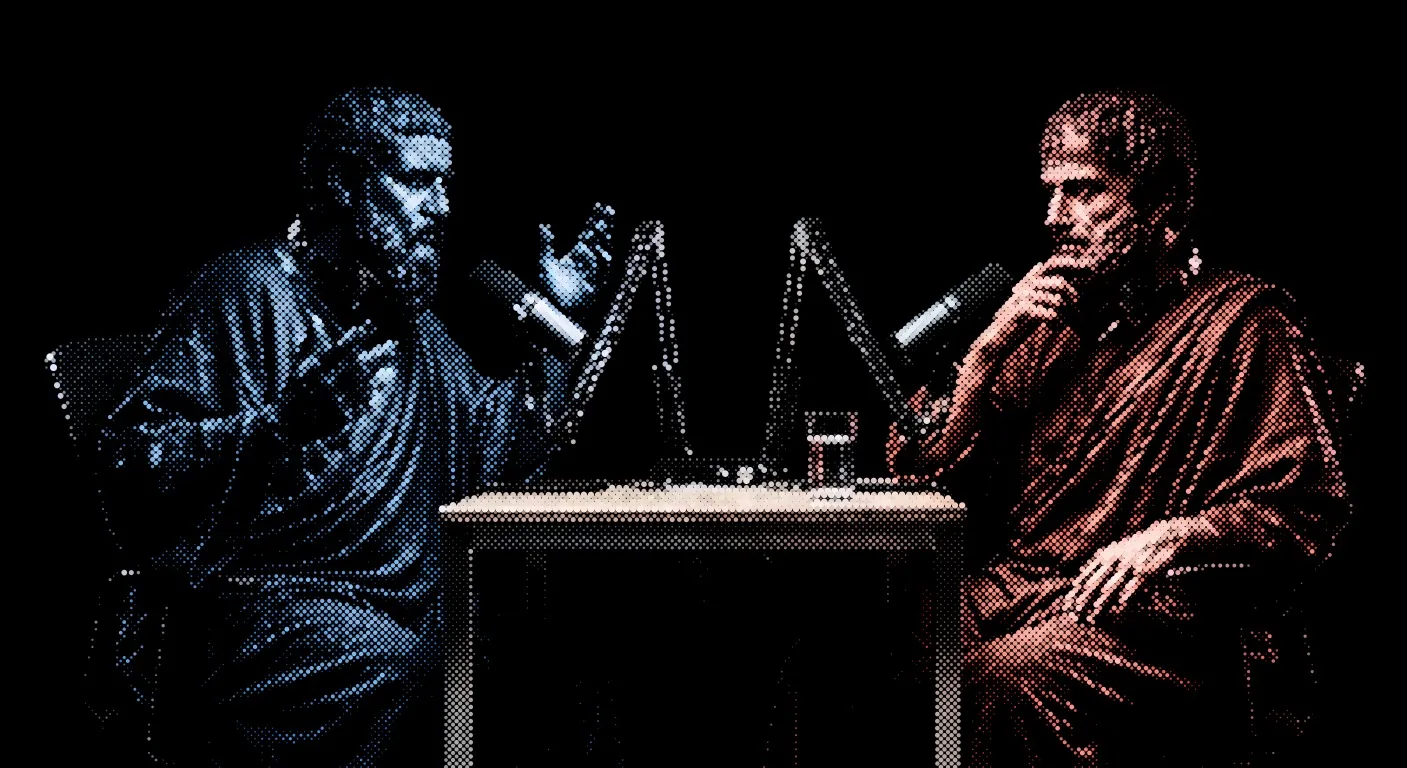
A long debate produces dozens of factual claims, a topic change every few minutes, and a VOD nobody scrubs back through. Here is what Contraverse does with it while it is still running.
Each debater runs a small desktop app that captures only their voice, or you point our Discord bot at your voice channel. No crosstalk to untangle, no guessing who said what: speaker identity is structural, not inferred.
Transcription lands with millisecond word timing on one shared timeline, counted in recorded debate time so a break never shifts anything after it. When someone says "I never said that," the timestamp answers before chat does.
Contraverse doesn’t list sentences. It builds the question being debated, the position each speaker holds on it, and the claims underneath — each one tracked to its end: open, contested, answered, conceded, or dropped.
A claim gets challenged, the topic moves, and the challenge never comes back. That thread is what your audience argues about for the next three days. Contraverse marks it dropped, in public, with the timestamp where it died.
Speakers
Cost so far
The question
Is the state’s housing shortage a supply problem or a permitting problem?
The permitting rules her office wrote caused the collapse.
contestedHousing permits in this state are down forty percent since 2021.
Median rent in the metro rose nine percent last year, the highest in a decade.
The slowdown predates those rules, and the vacancy tax is working.
answeredThe vacancy tax raised sixty-one million dollars in its first year of collection.
Your console, mid-debate. Your viewers open the same board at axioms.gg/<you> and see the same argument, minus the costs and the controls. One board, never two versions of what happened.
Viewers on your board vote on any checkable claim. Past the threshold, the AI researches it against the transcript and the open web, then posts a sourced summary with its scope stated. You never touch it mid-debate, and neither does a mod team.
Money never moves a claim. The fact-check queue is ranked by votes from signed-in viewers and nothing else.
Every AI-derived line on the board carries an "AI-generated, unverified" label, and we never hide it to look more confident. Fact checks read as sourced summaries, never as a verdict on someone's honesty, and a viewer who disagrees can say so on the check itself.
The public board lives at axioms.gg/you. Put it on a stream banner, pin it in chat, and viewers arriving mid-debate get the whole argument in one screen.
Once you go live there is nothing to operate. The console is there for the three moments that actually need you, and it stays out of the way for the other four hours.
Go live stays disabled until every speaker is connected and approved, and it names whoever is missing. Each one carries the most useful true thing about them: waiting, needs approval, muted, no audio, disconnected. Silence gets a reason instead of a shrug.
An empty room pauses after thirty seconds, a silent one after fifteen minutes, and both are yours to change mid-debate. The break comes out of the clock rather than being papered over, so every timestamp after it still lands where it should. Resume picks up mid-word.
The moment either side believes the tool favours their opponent, it is useless to both. So neutrality is built in, not promised.
Every analytic pass runs identically on every speaker's audio. Per-speaker configuration does not exist in the codebase.
How claims are extracted and how "dropped" is decided gets published in full before the first paid debate, so both sides can read the method before agreeing to play.
The full transcript is public and searchable while the debate runs, and every entry on the record jumps straight to the words it came from. If we got a claim wrong, anyone can check what we built it out of.
Every board is free to watch. A plan buys what you do on it: how much you say, and how many hours you put on the air.
Follow the argument, not the vibes.
$0forever
Create a free accountSay more.
$5/ month
Start with PlusCancel any time; it ends when the month does.
Bring the board with you.
$20/ month
Start with ProTwo shows a month, on your own public board.
$100/ month
Start with StarterFifty hours of recorded debate a month. At the cap the debate stops.
Every night, and it never cuts out.
$250/ month
Start with ProOne hundred and fifty hours a month, then $5 an hour on the next invoice.
We run it. You argue.
$500/ session
Book a sessionUp to four hours, with us on the call. No plan needed.
Every price is the whole price. Hours are the debate clock, breaks excluded; transcription and analysis are billed at what they measured, never at an estimate. A streamer account needs Starter or Pro to go live; the console, the wizard and the invites are yours to set up before you pay.
How Contraverse treats your audio, your claims, and your audience, before you ask.
Ask us directlyEach speaker runs a small desktop client that captures only their own microphone, or you point our Discord bot at your voice channel. The audio is transcribed live, and AI builds a public board: the question being debated, the position each speaker holds on it, and every claim underneath, tracked to whether it was answered, conceded, contested, or challenged and quietly dropped.
No, and we say so on the board itself. Everything AI-derived publishes live with an “AI-generated · unverified” label. It can be wrong; the label is the honesty.
No. The client’s recording indicator is always visible while capturing, capture stops the moment a session ends, and raw audio is never stored, it is transcribed in transit and discarded.
The public board at axioms.gg under the streamer’s handle: the live question tree, the transcript, search over everything said, and a vote button that triggers an AI fact check when enough viewers ask.
Watching is free on every board. Viewer plans are $5 and $20 a month for more to say and the extension. Streamer plans are $100 a month for fifty hours of debate and $250 for one hundred and fifty, then $5 an hour. The hours are the debate clock. See Pricing.
Partly. Create an account and you can set up a debate, invite speakers by email, and configure everything yourself. The first live run we do with you, on the call, not as a sales gate but because the first debate on new infrastructure is where things break and we would rather be there. After that you run them yourself.
Tell us the date and who is on the call. We will run the first one with you and send the report the same night.